
When You Care Enough: A History of Greeting Cards from 1611 to Today
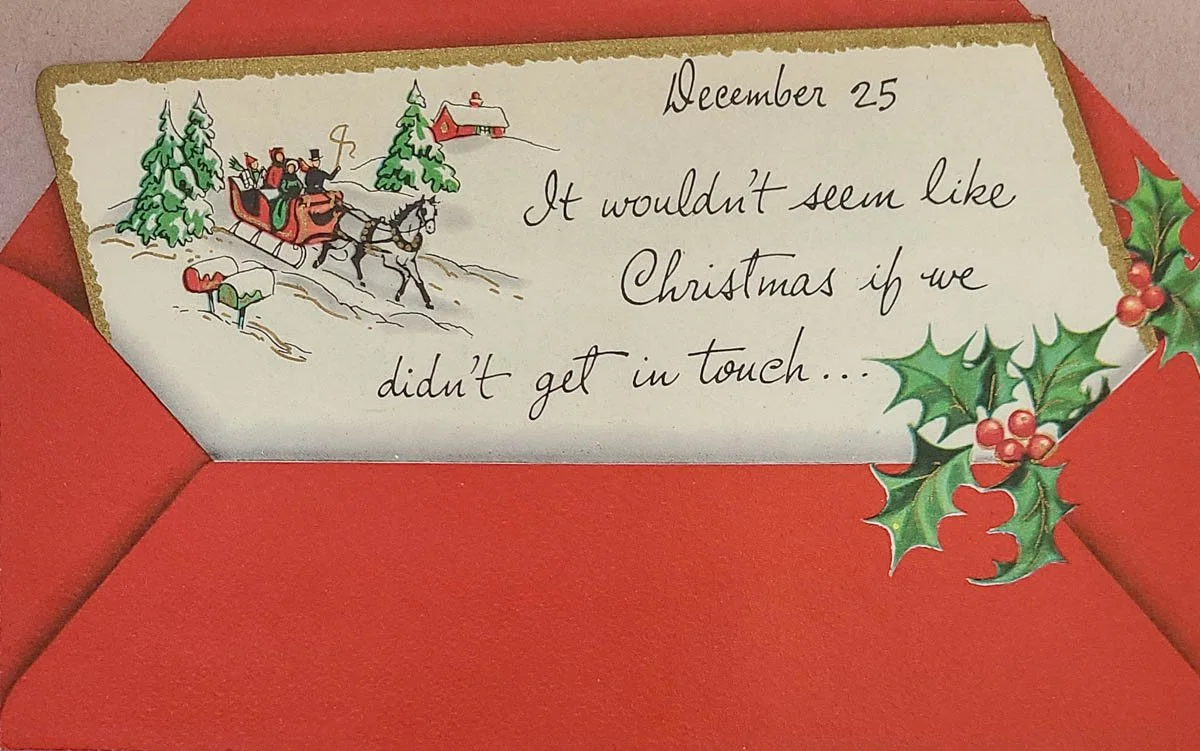
A Rose for a King: The First Known Christmas Card
The history of greeting cards starts much earlier than most realize. The earliest known example is from 1611. It was when Michael Maier, a German physician and philosopher, sent a handmade Christmas card to King James I of England and his son. Why he did it is unclear, and it’s also unknown if the card was well received.
The card was huge, 24” x 36”, and crafted on fine paper. Its design was ingenious, forming the shape of a rose modeled almost entirely from Latin text. The colors were red, black, and gold. Around the petals of the rose were eight messages: The blessing of heaven. The health of the body. A time of peace. The rewards of work. Victory against enemies. A long life. Fervent piety. Love of learning.
Maier's message honored the sacredness of Christ’s birth while expressing wishes for prosperity in the coming year. It combined artistry and devotion that laid the foundation for centuries of greeting card traditions.
The Card That Changed Everything in 1843
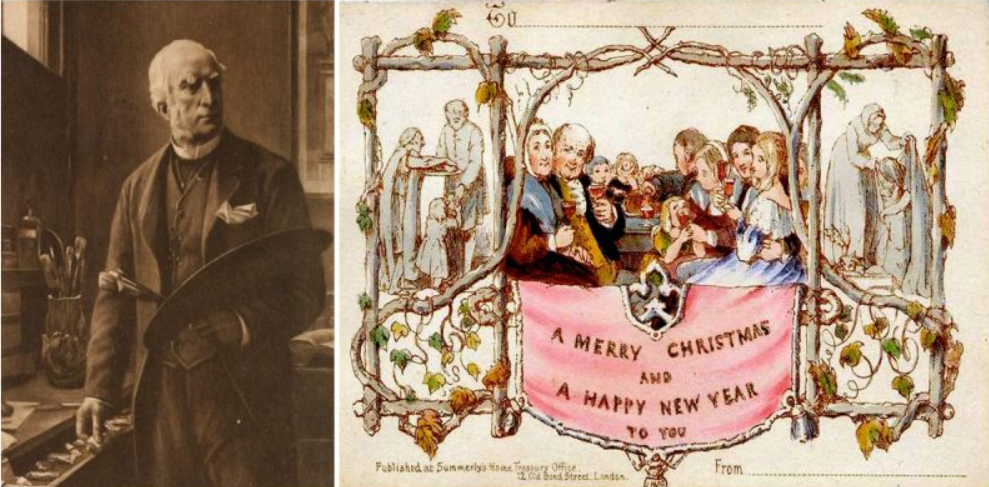
John Callcott Horsley, designer of the first Christmas card in 1843.
The idea of sending cards gradually spread across Europe, but it wasn't until 1843 that the first commercially produced Christmas card appeared. Sir Henry Cole, a busy English civil servant, wanted a way to send holiday greetings without writing long letters to each relative, friend, and acquaintance. So, he hired artist John Callcott Horsley to design a card that could be printed repeatedly. Horsley’s card showed a family gathered in celebration, flanked by scenes of charity. The inscription read, “A Merry Christmas and a Happy New Year to You.” About a thousand copies were printed on stiff cardboard, and the tradition of mass-produced cards was born.
Louis Prang and the Birth of the American Christmas Card
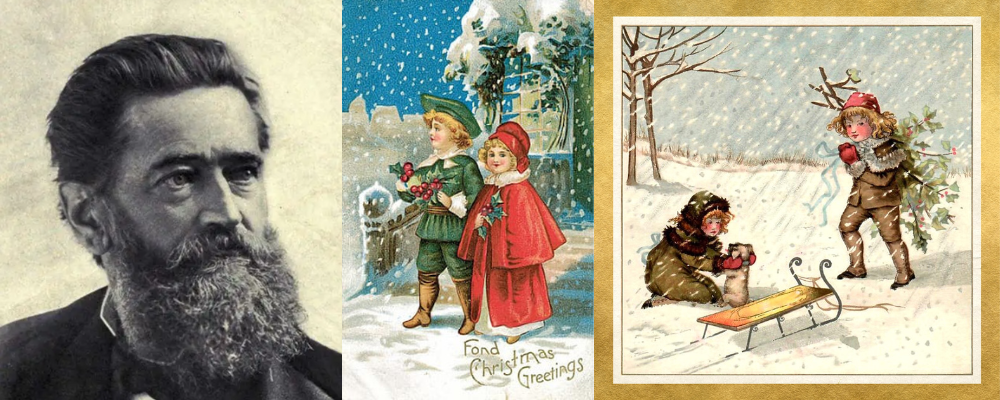
Louis Prang, considered the father of American greeting cards, and two of his company’s designs.
By the mid-19th century, German immigrant Louis Prang brought color lithography to the United States. While he didn’t invent the equipment, he revolutionized its use. The inventor of the color wheel used by artists today, his cards featured elaborate decorations, embossing, gilt edges, and hand-painted details. Prang produced high-quality cards at affordable prices, which quickly earned him the nickname “Father of the American Christmas Card.”
Victorian Whimsy: Frogs, Insects, and Snowy Scenes
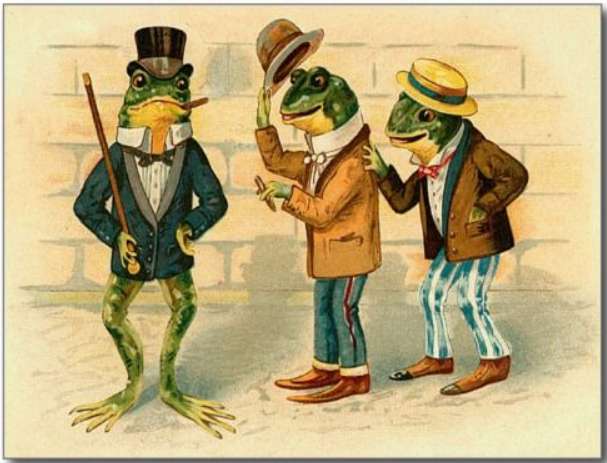
Victorian-era Greeting Cards
Frogs in suits.
Card designs evolved over time. Victorian greeting cards showcased the era’s love for sentimentality and whimsy. Alongside snowy cottages, cherubic children, and religious images, quirky and even eccentric designs began to appear. Frogs in suits, oversized insects, and humorous caricatures, designs that had little to do with Christmas itself, became popular. Over the years, more innovations emerged, like die-cut shapes, pop-up 3D designs, and eventually cards that played music or sounds when opened.
Mailboxes Overflow: The Tradition Takes Hold
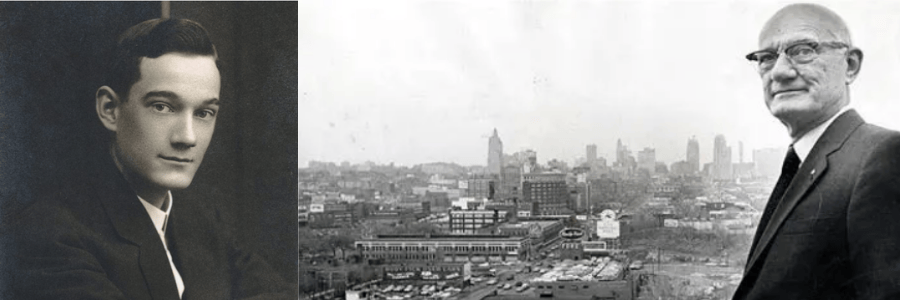
Joyce Hall at age 18 and later in his late 70s with the Kansas City, Missouri, skyline in the background.
By 1910, Joyce Hall, at age 18, with only two shoeboxes full of postcards under his arm, stepped off a train in Kansas City. His postcards sold well, but he soon noticed that people wanted more privacy. So, he partnered with his brothers, Rollie and William, to establish Hall Brothers and began offering high-quality valentines and Christmas cards mailed in envelopes. Joyce Hall’s idea transformed the card industry. With the slogan “When you care enough to send the very best,” greeting cards became cultural staples, tokens of thoughtfulness exchanged for birthdays, anniversaries, Valentine’s Day, Mother’s Day, and especially Christmas.
Clinton’s Greeting Card Stories
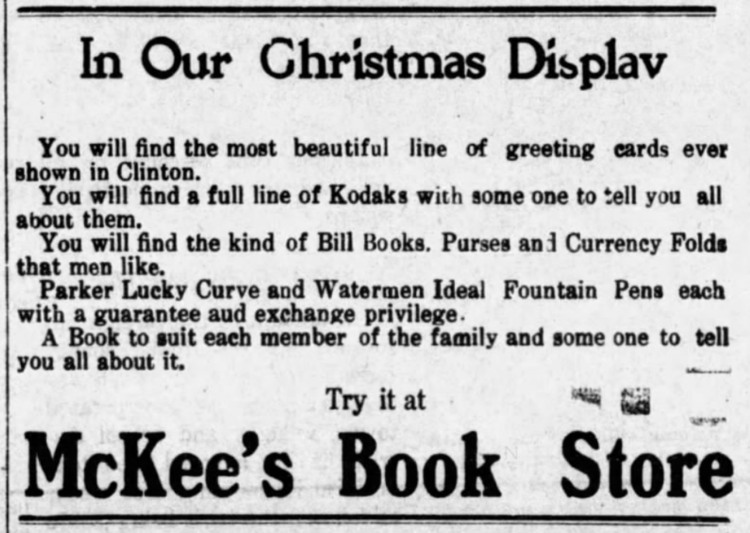
McKee’s Book Store ad in The Henry County Republican, December 11, 1913.
Clinton, Missouri’s newspapers captured the tradition of card giving, as well. The Henry County Republican, in 1913, printed an ad from McKee’s Book Store, which had been a staple in Clinton since 1875. They boasted having “the most beautiful line of greeting cards ever shown in Clinton.” By 1918, they encouraged townsfolk to send cards “to the boys in France” during World War I. Once again, in 1919, a McKee’s ad urged readers to send a card to “that friend you haven’t written to for years…” and claimed that “we have just the cards to say just the right thing, and you can spend what you like on them, from 1 cent to 50 cents.”
In 1921, The Clinton Eye praised Goldena Kinyon Swartz’s hand-painted cards. A former Clintonian, she and her husband, Jack, started a greeting card business in Kansas City. Both were artists. Together, they developed their own style, designing, decorating, painting, and writing sentiments to express individuality.
December 26, 1929, The Clinton Eye reported that they happily received many lovely greeting cards, but the most original came from Mr. and Mrs. Hammond and their two children. Frank, an artist for the Wichita, Kansas, Eagle, designed a whimsical card with four wishbones, each featuring a family member's head. The inscription read, “The Hammonds are wishing you a Merry Christmas and a Happy New Year.” Mrs. Hammond was a “Clinton girl” and, before her marriage, Miss Elsie Shoe. She was also “a valued employee of The Clinton Eye.”
Mrs. W. W. Clark, known for having the greenest thumb in Clinton, outdid herself in 1941. She placed 11 poinsettias with 35 scarlet blooms in two south-facing windows of her and her husband's home on South Second Street. Her display caught the attention of neighbors and a local newspaper that described them as a “living Christmas greeting card.”
Lists, Ledgers, and Loyalty
At the height of the Christmas card tradition, people mailed cards to nearly everyone they knew—friends, relatives, neighbors, coworkers, and even distant acquaintances. It was common for households, especially in the 1950s and ‘60s, to send dozens, often hundreds of cards every December. They also kept records of who they sent cards to. Families would maintain lists year after year, ensuring that no one was forgotten. Many also tracked who reciprocated.
Billions in the Mail: The Peak of Card Giving
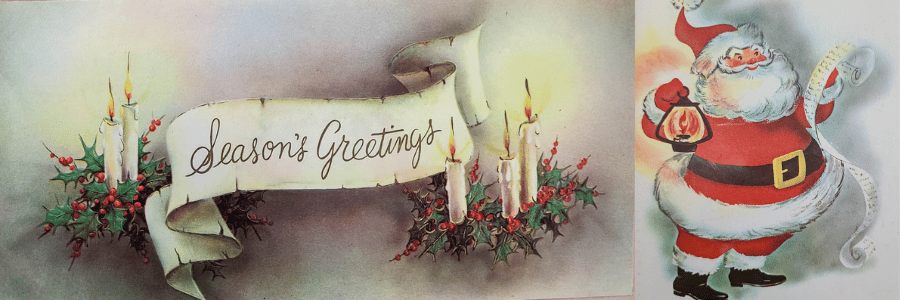
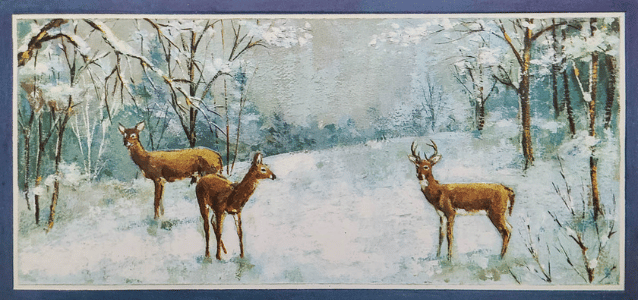
Every December, mailboxes overflowed with Christmas cards. In 1990, the U.S. Postal Service recorded over 2.8 billion stamped cards and postcards were mailed that year, most of them Christmas cards. This huge number reflected both the prosperity of the times and the cultural expectation that holiday greetings were an essential part of life.
Cards as Keepsakes and Decorations
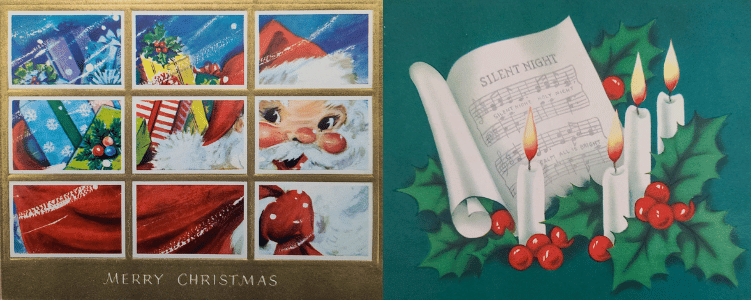
Christmas cards became valued household objects, too. Cards became both greetings and decorations, welcome reminders of cherished relationships and friendships that recipients had developed over the years. Families saved them in baskets, pinned them to walls, strung them across mantels, and tucked them into scrapbooks and photo albums.
The Decline of a Tradition
Still, even though card giving had mass appeal, it was a custom destined to change. The decline began in the late 20th century, with rising postage costs, the convenience of cell phone calls, and email. The introduction of e-cards in the late 1990s further eroded the card-giving tradition. E-cards offered instant delivery and animation, but they never managed to convey the tactile warmth of paper. Surveys suggest that while e-cards are accepted, most people still prefer physical cards for meaningful occasions. Interestingly, collectors have paid high prices for rare cards: surviving copies of Horsley’s 1843 card have sold for more than $20,000 at auction. It's unlikely that Sotheby's will auction off e-cards anytime soon.
Christmas Cards Endure
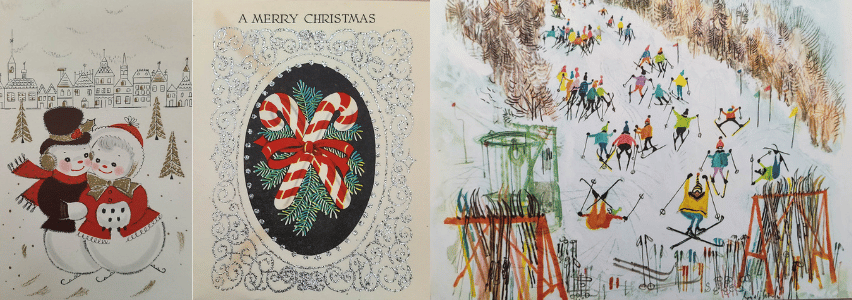
The act of card giving, while diminished, still lives on. Even though the act of mailing cards has declined by 50 percent since its peak in the ‘90s, the top five occasions for card sending remain birthdays, Christmas, Valentine’s Day, Mother’s Day, and anniversaries, in that order.
From Maier’s rose-shaped message to Hallmark’s glossy prints, from hand-painted artistry to digital animations, greeting cards have mirrored society’s changing ways of expressing that they care. Yet at Christmastime, the ritual endures. A card on the mantel, or tucked into a basket, still offers us the same sentiment that Horsley printed nearly two centuries ago: “A Merry Christmas and a Happy New Year to You.”
---
Mark Rimel, a Henry County Museum volunteer, wrote this article based on several sources, including The Clinton Eye, the Henry County Republican, KC Yesterday, Hallmark Cards, Inc., The American Antiquarian, The New England Historical Society, The Vintage News, United States Postal Service, and Wikipedia.