
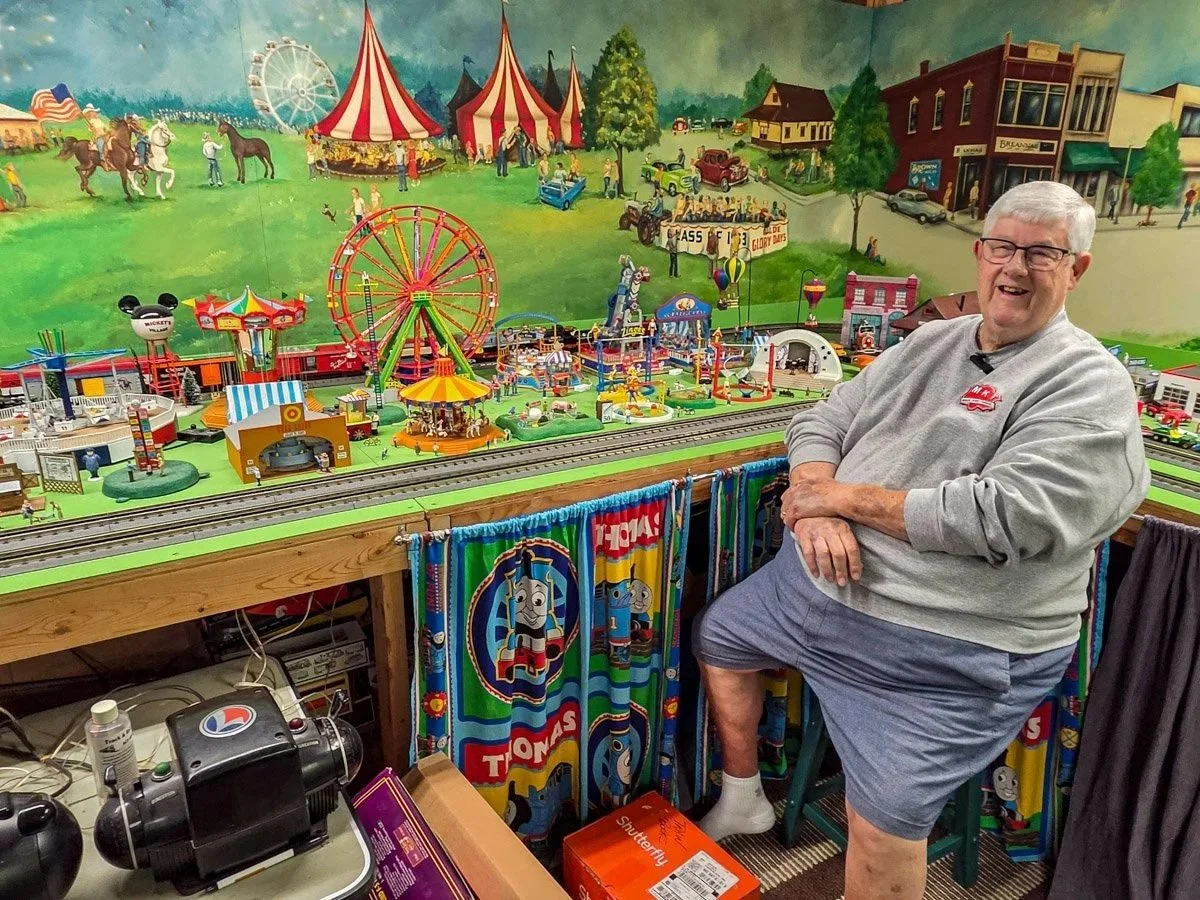
To understand David Lester Mills, start with a five-year-old boy on a Missouri Pacific train, riding a short stretch from Butler to Passaic, Missouri. His father, a postman, had friends on the railroad who set up the trip. It only lasted minutes, but it changed everything. “I thought it was the greatest thing ever,” David recalls. “That planted the seed.”
That Christmas, his parents bought him his first train set. Lionel was too expensive—fifteen dollars was out of reach—so they bought a five-dollar Marx set instead. “I still have that original train,” he says. It sits today among hundreds of engines and cars in the basement of his Clinton home, a collection built over a lifetime of curiosity and pure joy.
Growing Up in Butler
David was born on August 23, 1948, in Butler, Missouri, as the second of four boys raised by John Riley Mills and Mary Isabel Mills. His father was born in nearby Aaron, and his mother in Butler. The household was lively and just as noisy.
His first job was at a drive-in theater, where he collected money from customers, handed it to the woman in the booth, and then climbed onto the roof to watch for kids jumping out of car trunks to avoid paying. “We’d catch them and throw them out,” he says with a grin.
Later, he worked at McGuire’s Grocery, "stocking shelves, carrying out groceries, and candling eggs. People brought in eggs, and you had to candle them to make sure there wasn’t a chicken inside.” Candling meant holding each egg up to a bright light to check for cracks, blood spots, or early signs of a developing chick—an everyday task in stores of the era, but one many people today have never seen. “You’d be amazed how many had chickens in them,” he says. “Whatever needed doing, we did it.”
One of the most influential experiences of his youth came through Scouts. His Explorer leader, John Underwood, owned the funeral home in Butler, and after school, David would stop by to deliver flowers. He didn’t know it then, but that small job would eventually shape the course of his working life.
Coming to Clinton
After high school, David attended UMKC for two years before finishing mortuary school in Dallas. Once his training was complete, he secured a position at Atkinson Funeral Home in Harrisonville, the county seat of Cass County. During this time, roughly from 1975 to 1977, he also served as Cass County Coroner, a dual role that was common in Missouri at the time.
In 1977, an opportunity came about that changed the direction of his life. Mr. Vansant, longtime owner of the Vansant Funeral Home in Clinton, had passed away earlier that year, and his widow was ready to sell the business. David purchased the funeral home and moved to Clinton, renaming it Vansant–Mills Funeral Home. From then on, Clinton became his home, his community, and the center of his personal and professional life.
A Basement That Became a World
Walking down the stairs at David’s house, you immediately notice a theme—railroads and train memorabilia decorate the basement living area: artwork, lanterns, locks, oil cans, signs, and more.
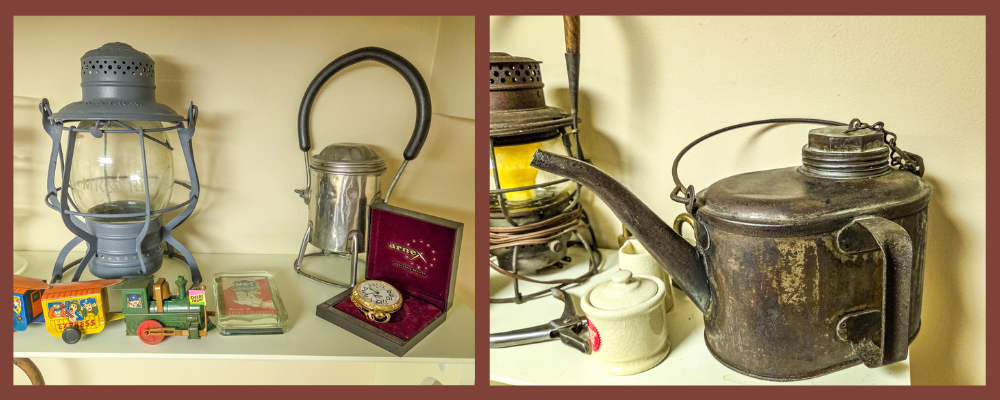
Much of his collection features the MKT logo, representing the Missouri-Kansas-Texas railroad line he focuses on. On shelves and tabletops, there are several lanterns, each with the MKT logo etched into their glass globes. Nearby, a well-preserved deck of MKT playing cards is displayed. There is also an MKT sign that may have once been mounted on the side of an old depot somewhere.
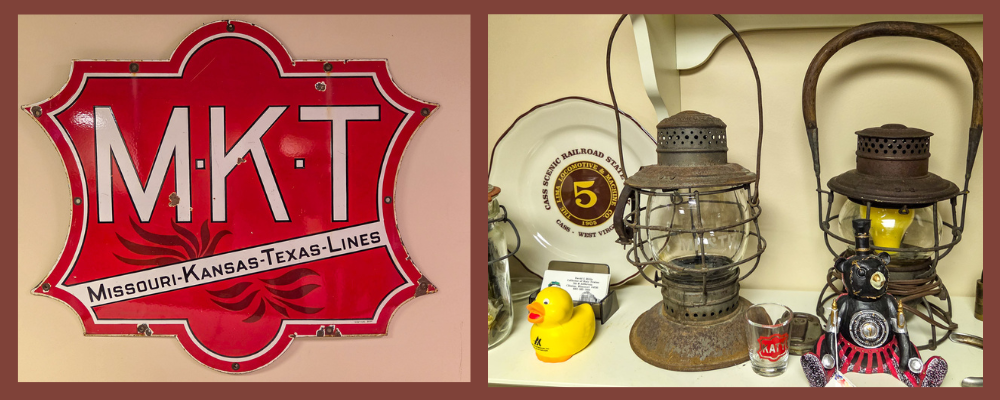
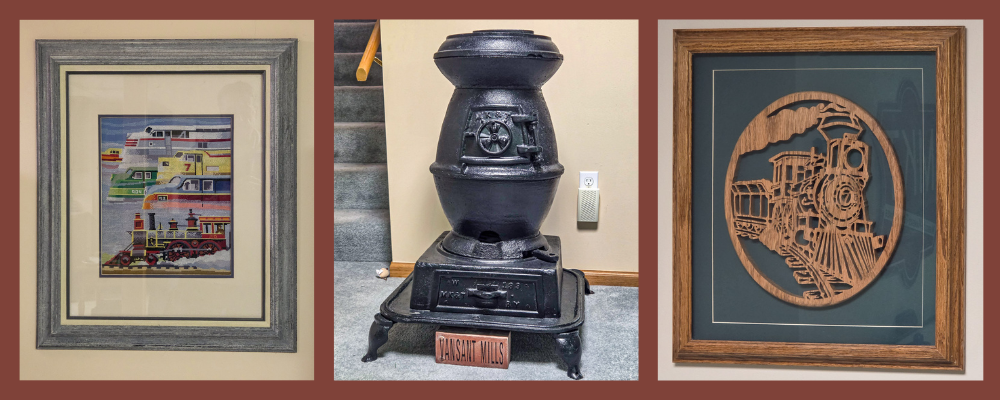
Among his most remarkable pieces are a potbelly stove from an MKT caboose and a large original MKT sign. The potbelly stove was in a pile of bits and pieces, unrecognizable to most folks. David, however, knew it was a hidden treasure found in plain sight. He bought the lot for $25, carried it home, hung the sign, and restored the old potbelly to its original form.
The walls are decorated with framed photographs, paintings, and railroad-themed artwork. One example is a striking carved image of a steam engine with its coal car behind it, and smoke pouring from its stack.
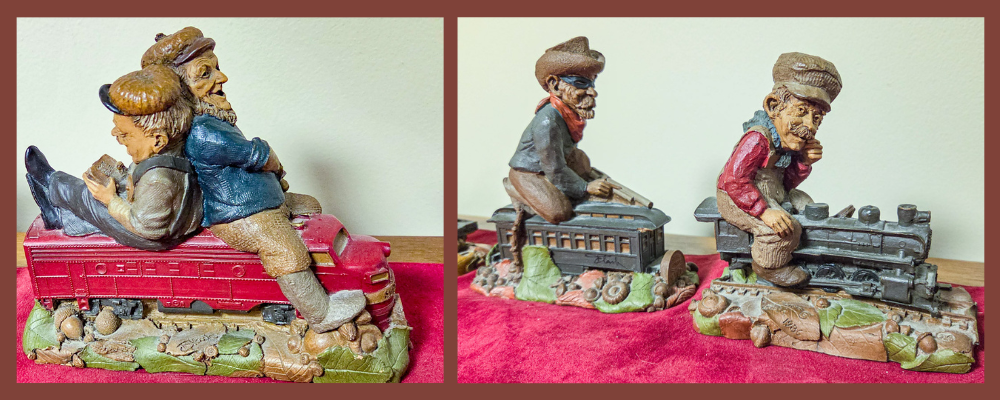
His collection of Thomas Clark railroad figurines is neatly lined up in a row. Every Christmas, a family member gave him one, and each figure is as unique as it is whimsical.
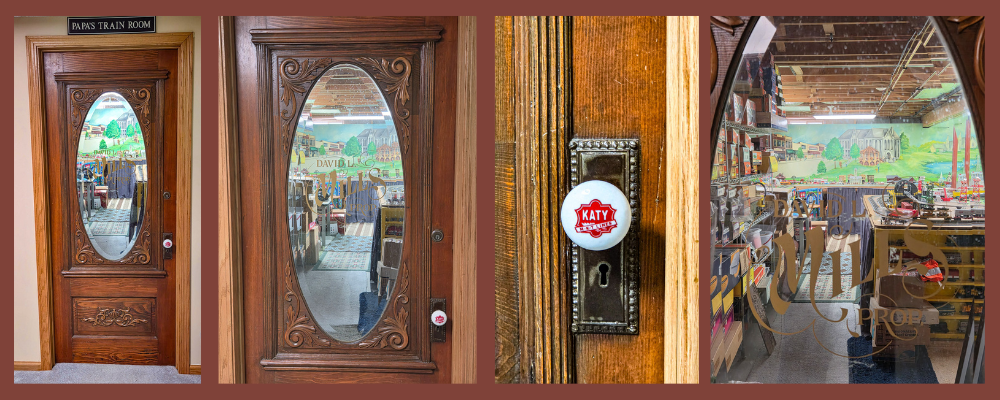
All of these railroad objects, as fun as they are to look at, are only the beginning of David’s true fascination with trains. Walk through an ornately carved antique door that David rescued before it was headed to a trash heap, and you step into a world that feels both miniature and joyful. That inner child in all of us, which may have been hidden for years or even decades, can’t help but emerge once again. You smile as you try to take it all in. You try to hold back the childlike giggles bubbling up inside when all you can say is “Wow!”
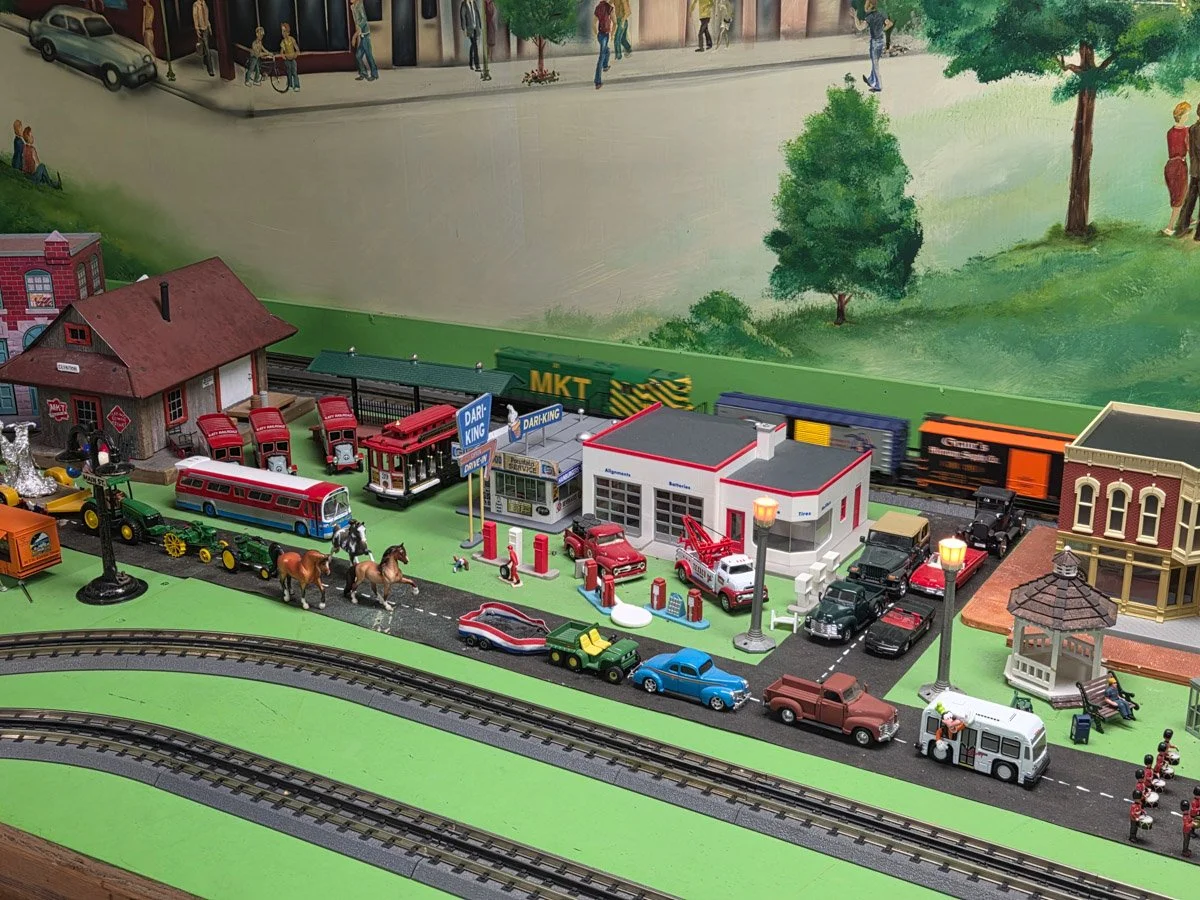
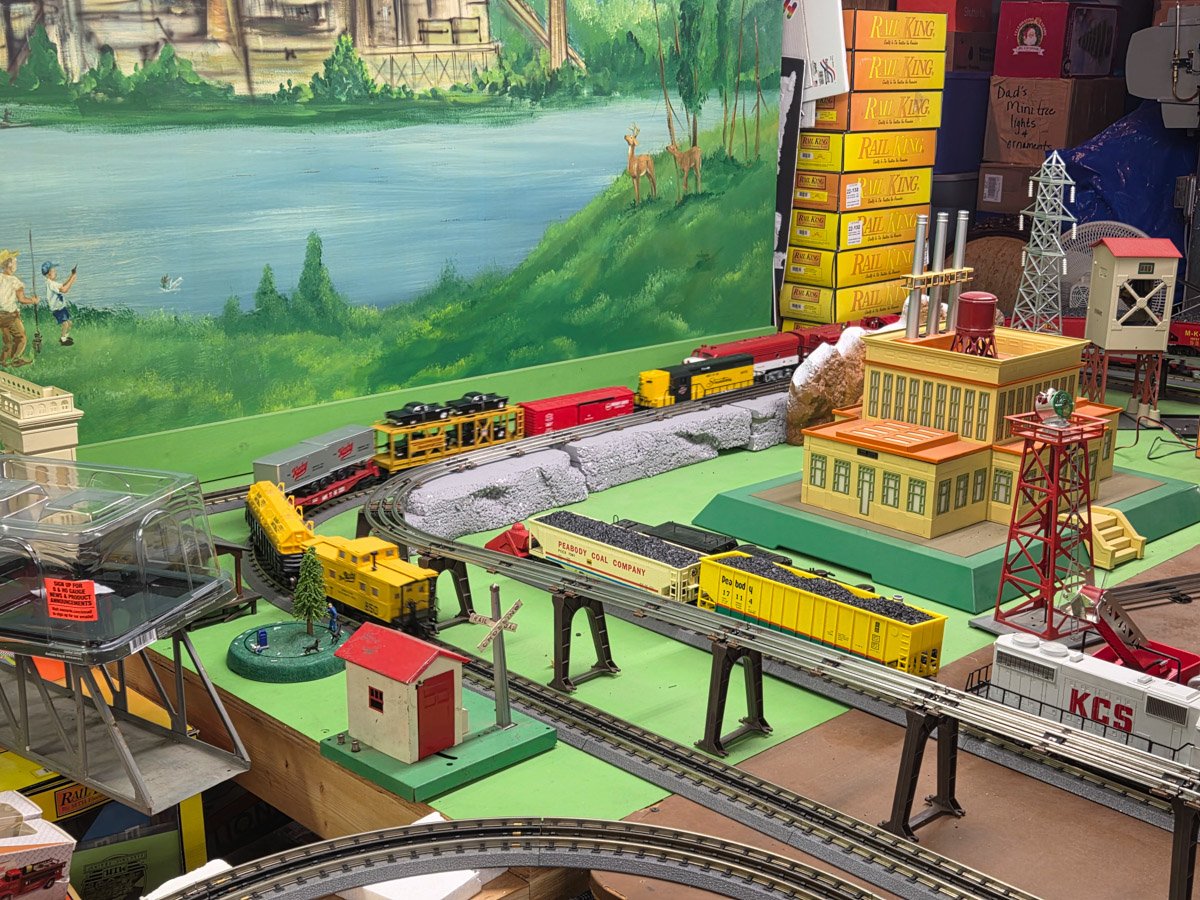
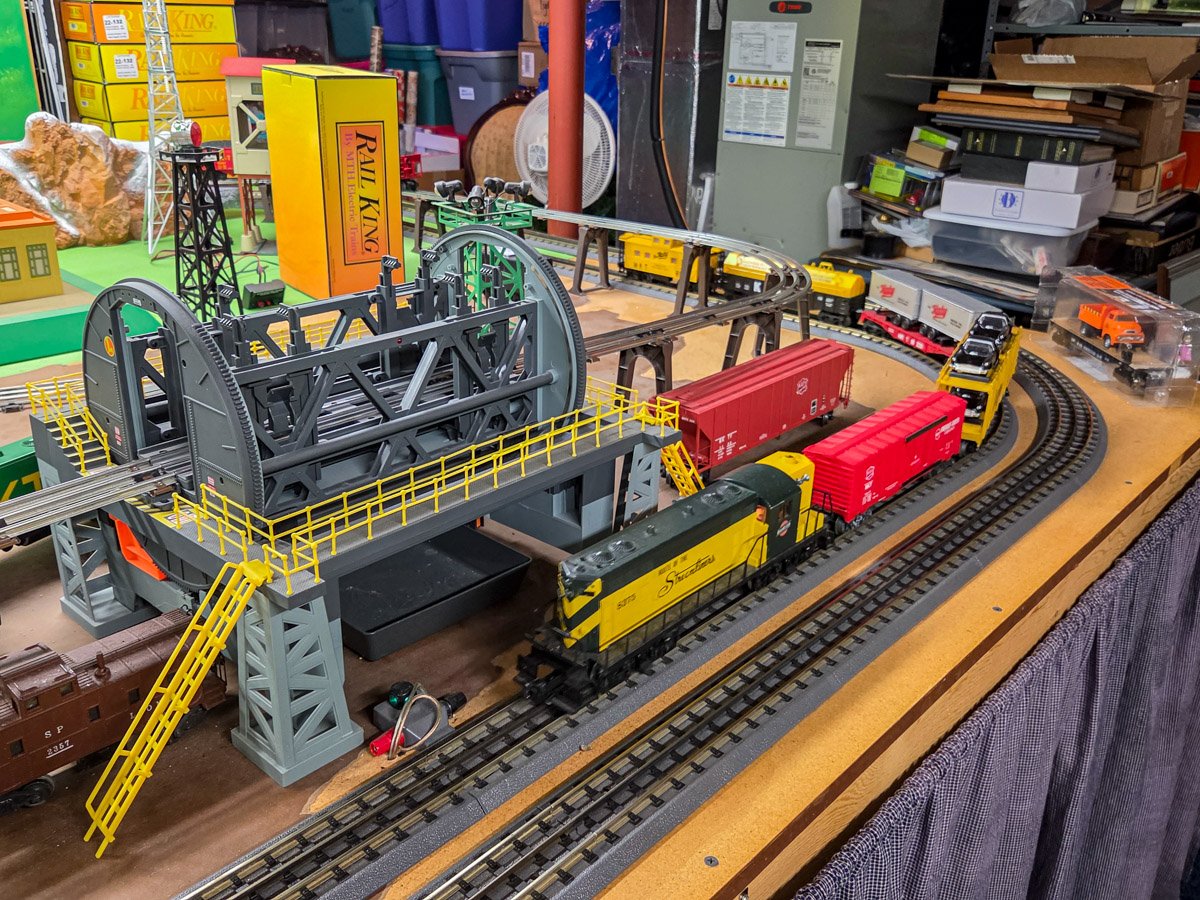
His wife, Deb, gave him half of the unfinished basement storage space, and he filled every inch of it. Six O-gauge lines. HO is too small for him, “I couldn’t keep the track together.” The O-gauge tracks run through a landscape that blends memory, local history, and imagination. “I’m not into crafting scenery—I want to run the trains,” he says, but the layout is far from simple.
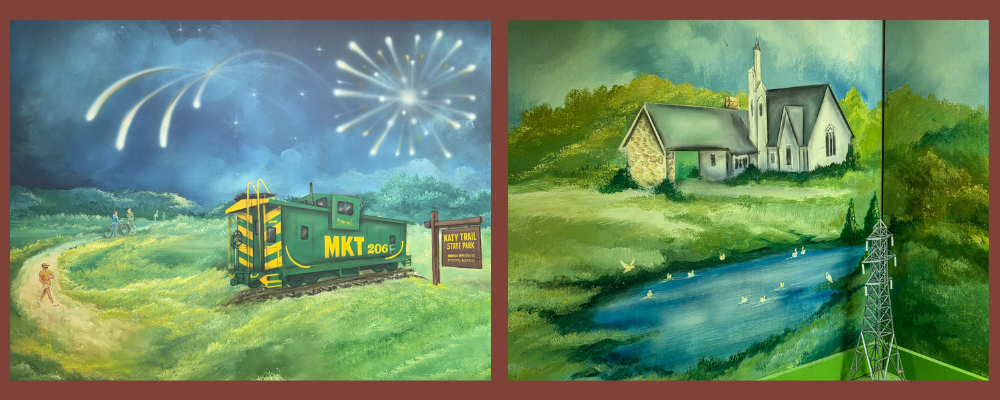
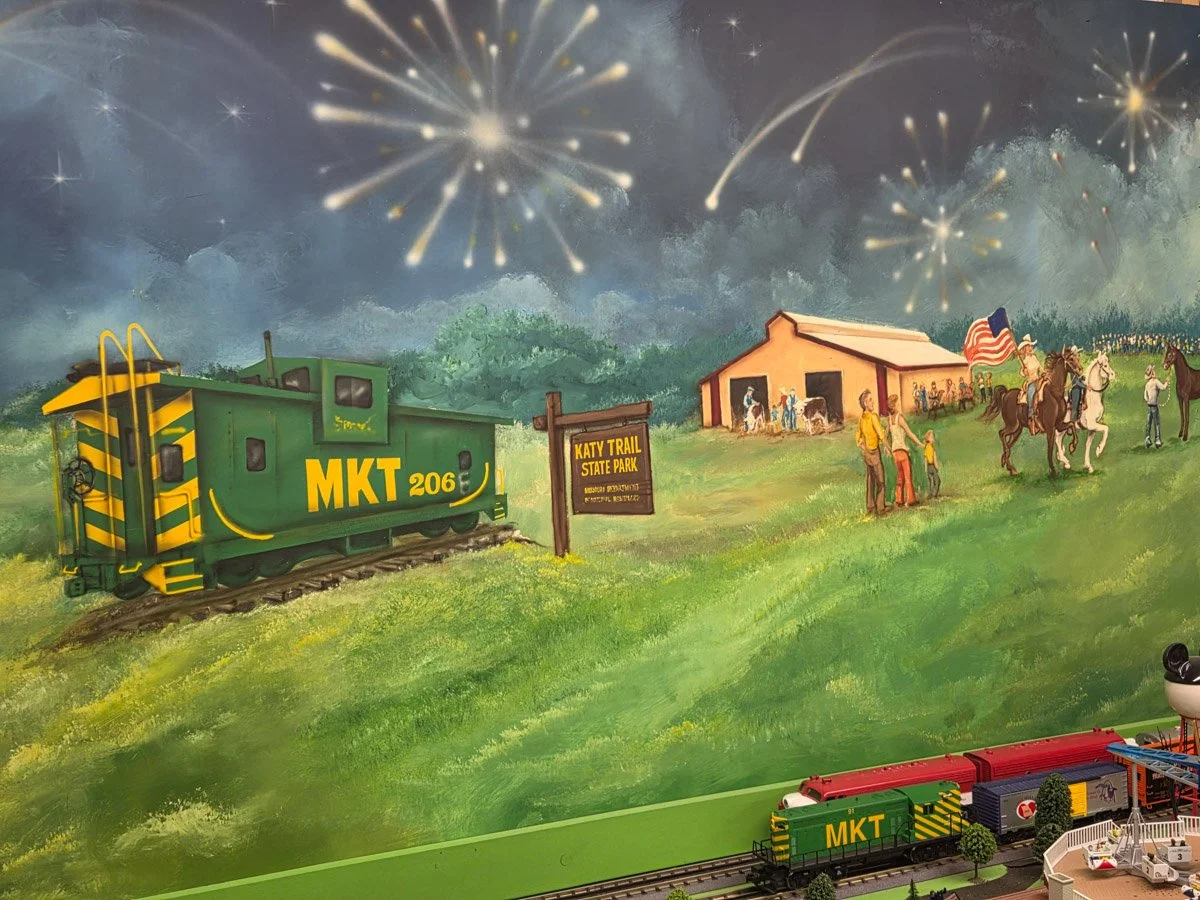
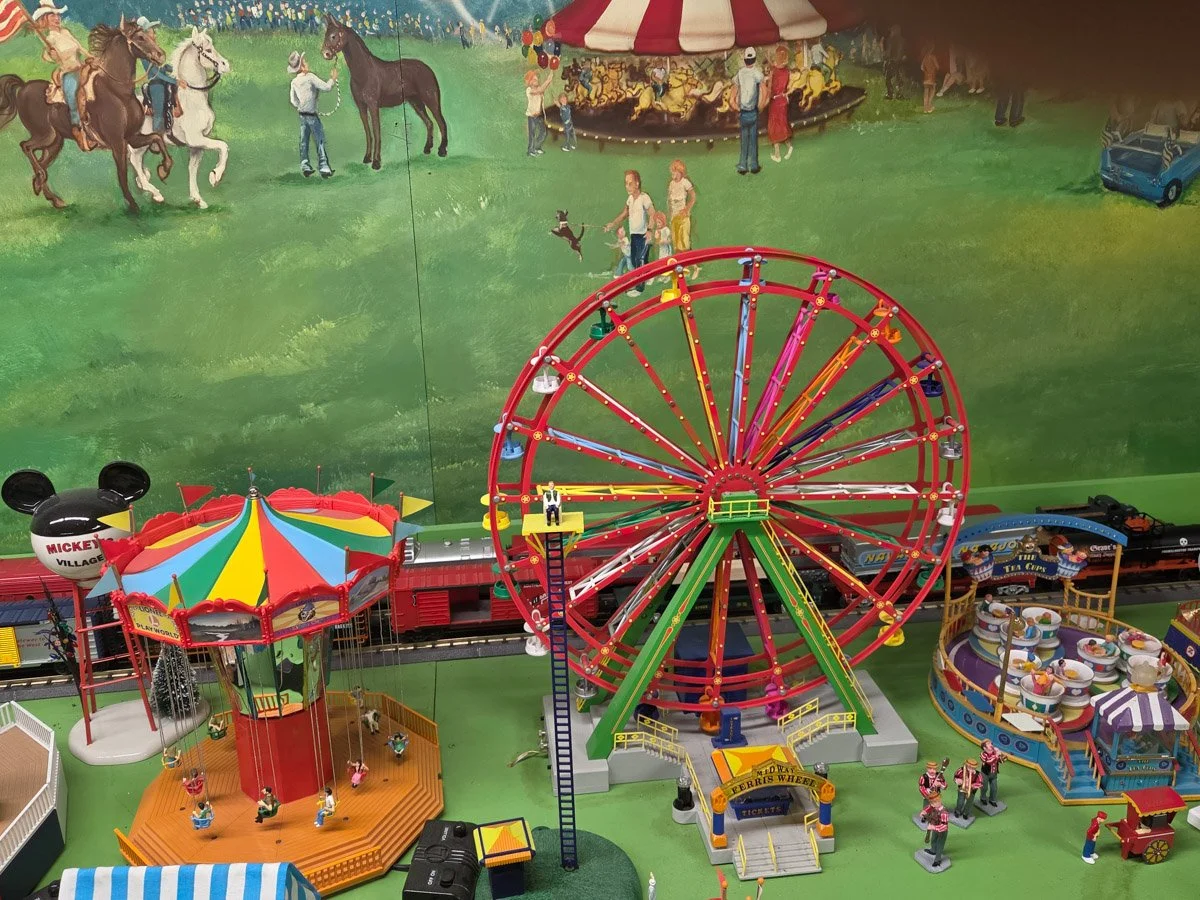
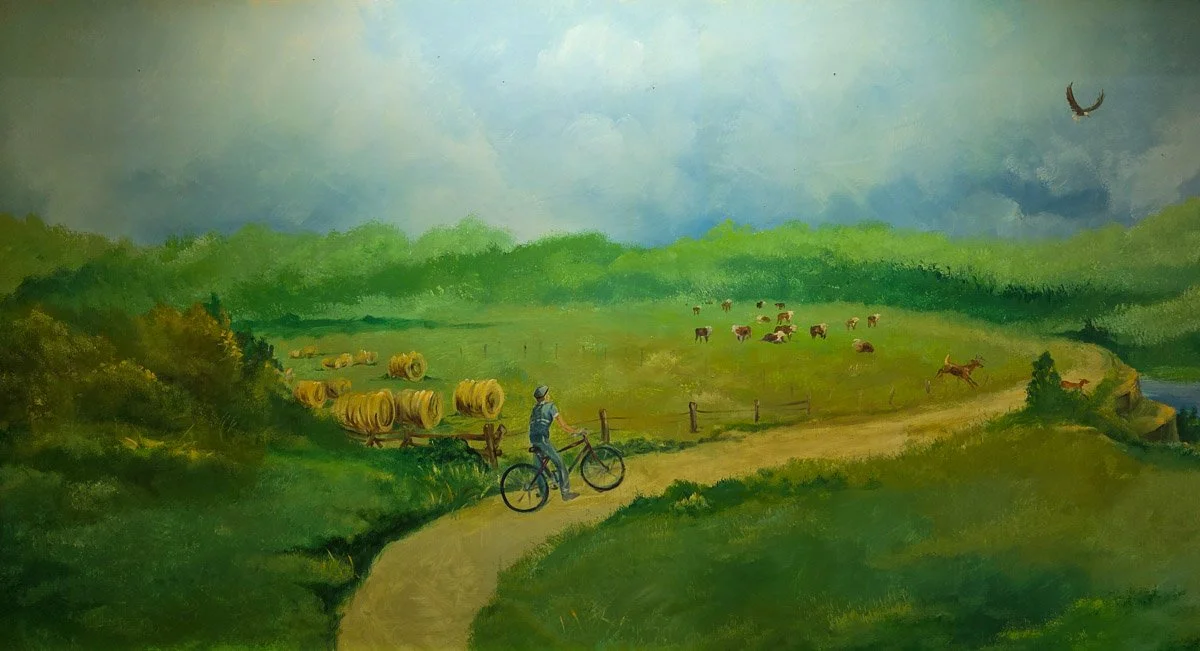
Much of the scenery in the railroad layout is pre-made, but the vision is entirely his. He envisioned what he wanted on the walls and asked local sign and mural artist Richard Brooks to paint the background panels. Richard did a masterful job of portraying the local scenery.
The Layout as Local History
David’s layout is filled with Clinton landmarks. The ball field. The courthouse. The old fire station. He started creating his layout with the ball field at one end and worked his way clockwise around the train table.
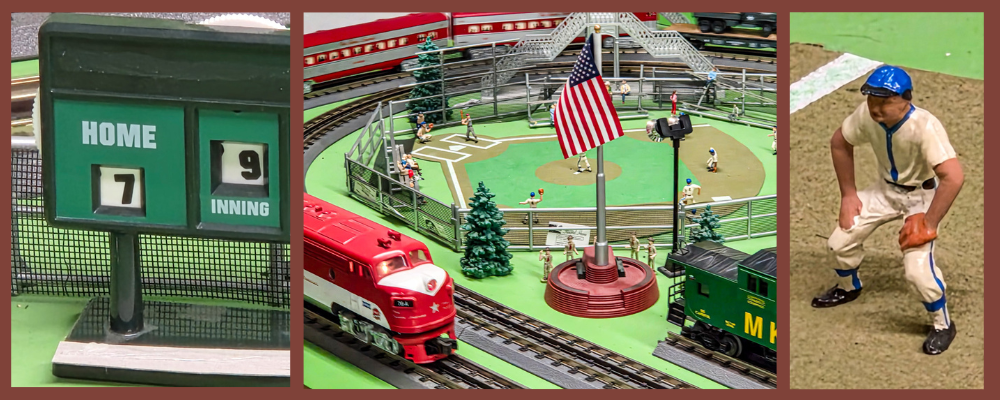
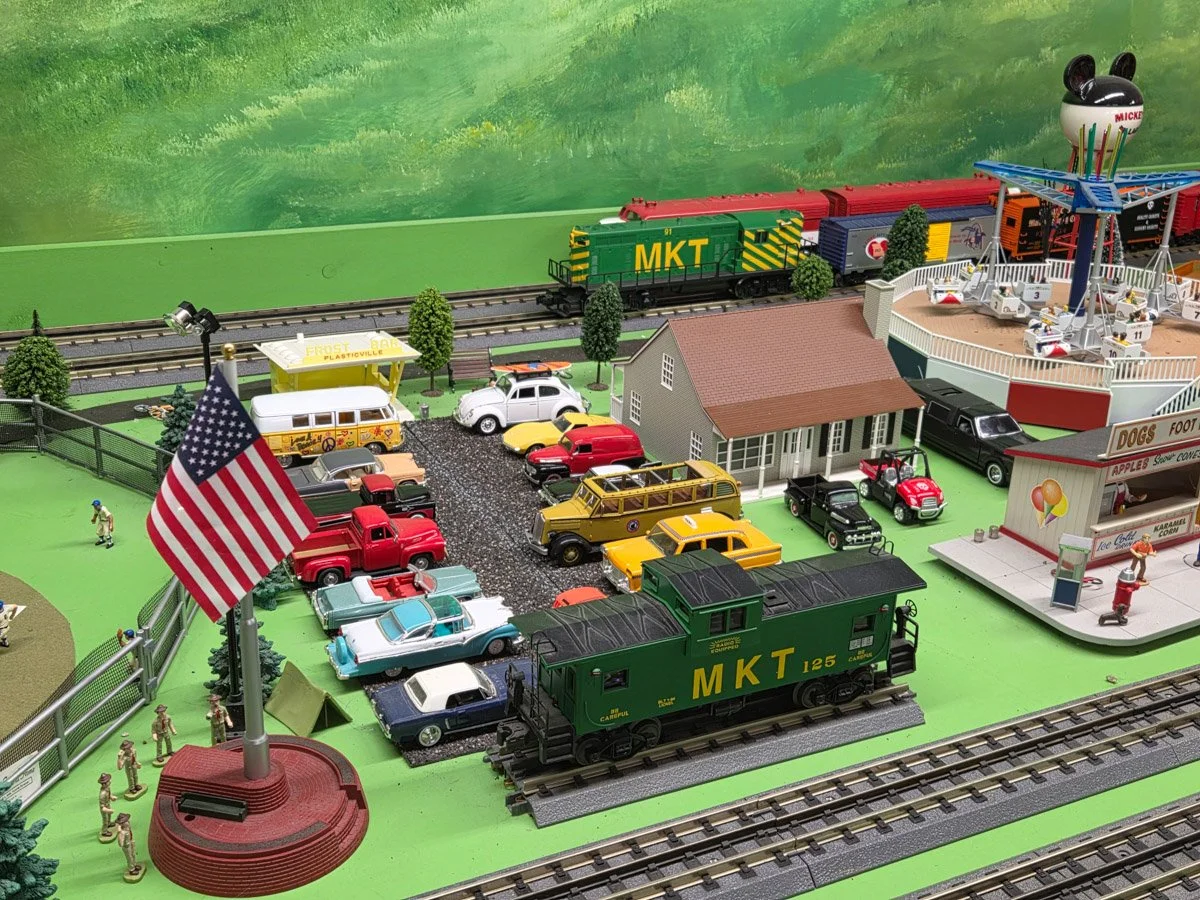
The ball field features players in action, spectators in the stands, a scoreboard tied in the ninth inning, lights, and Boy Scouts saluting the American flag, as a train passes by. There is also an MKT caboose in a parking lot, similar to the real one at the Katy Trail.
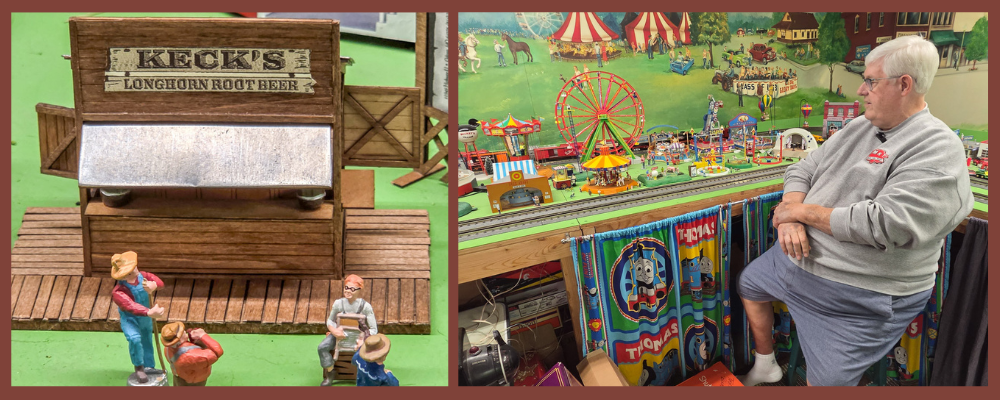
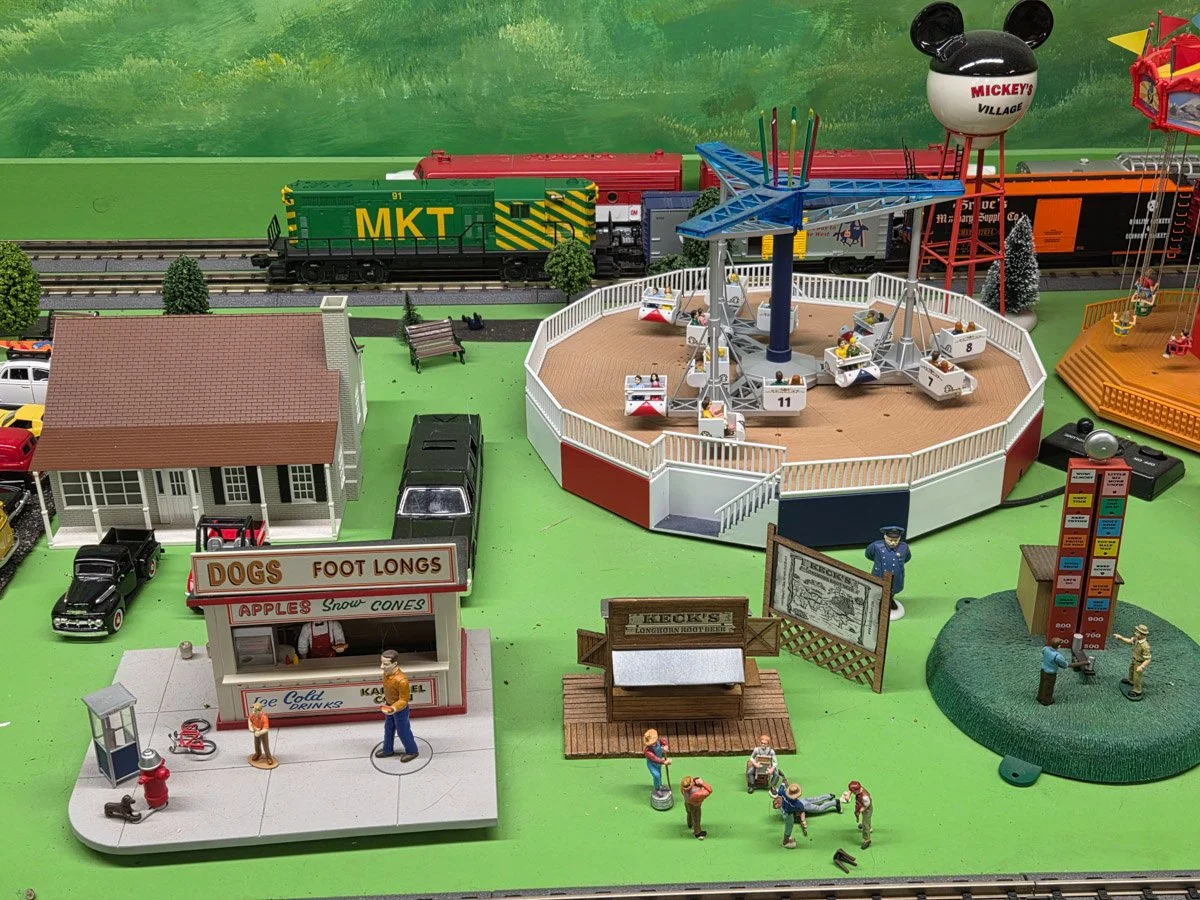
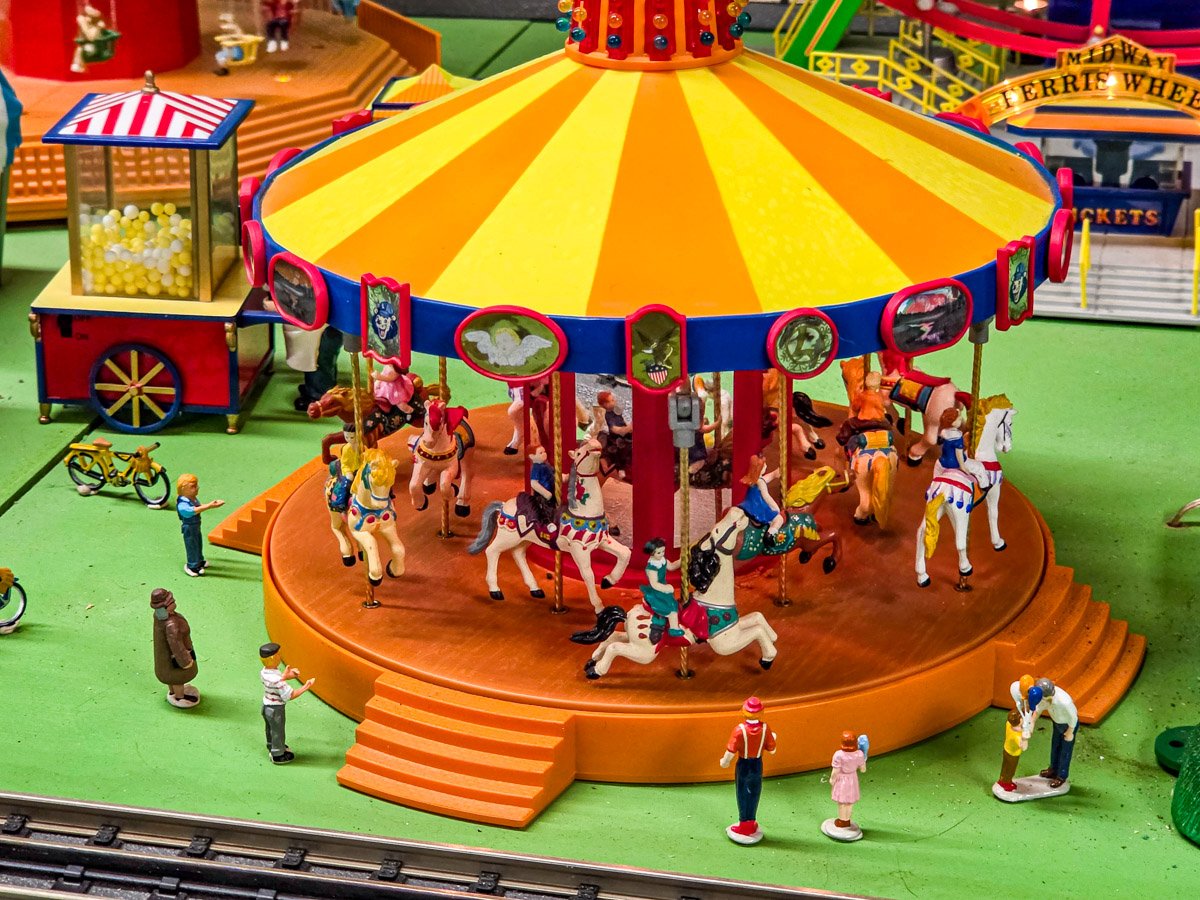
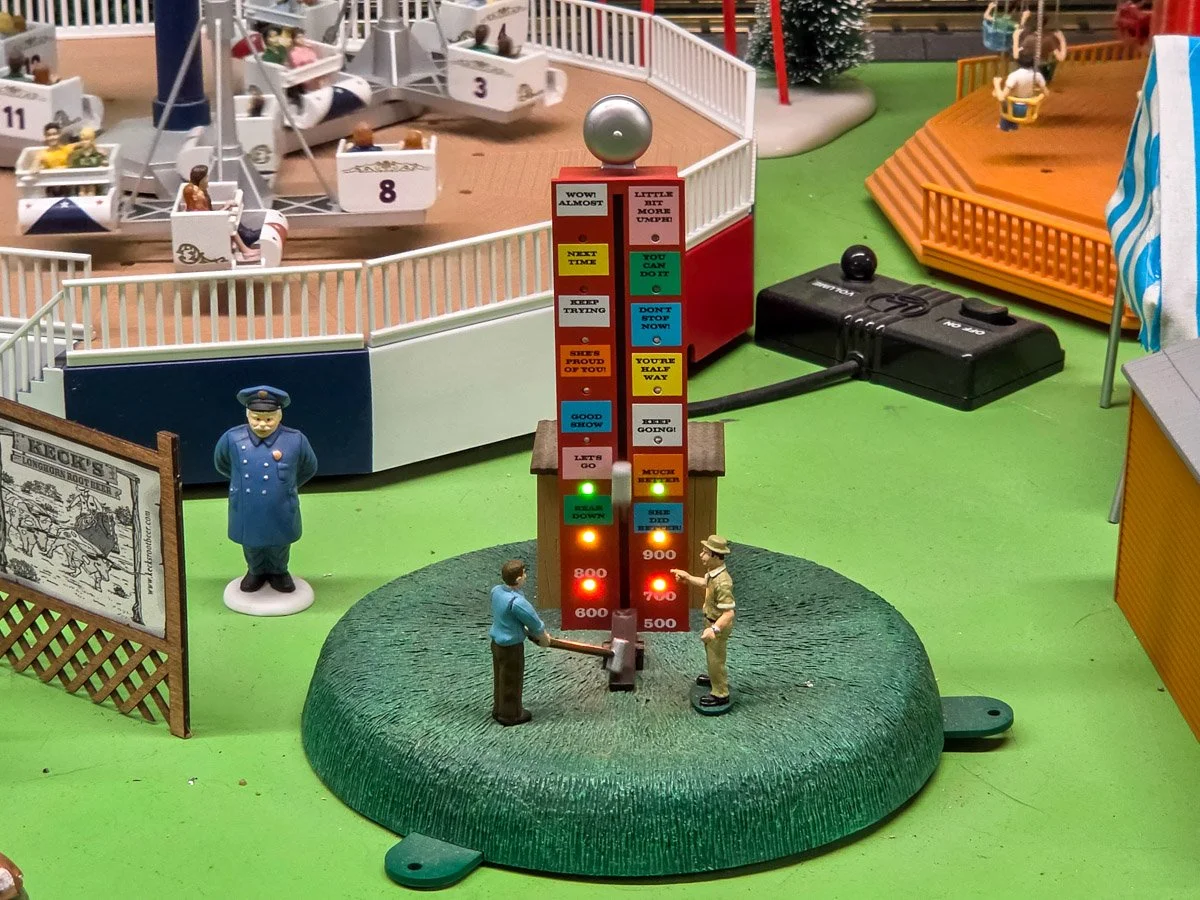
Next to the ballpark is the Old Glory Days section, the festival that David played a key role in creating and managing for twenty years. “The Old Glory Days section is definitely the most satisfying,” he says. It features a Keck’s Longhorn Root Beer stand, which is one of David’s favorites. His son-in-law made the Keck’s sign for him. “That sign means a lot to me,” he says. Keck’s was present at Old Glory Days every year he managed the event.
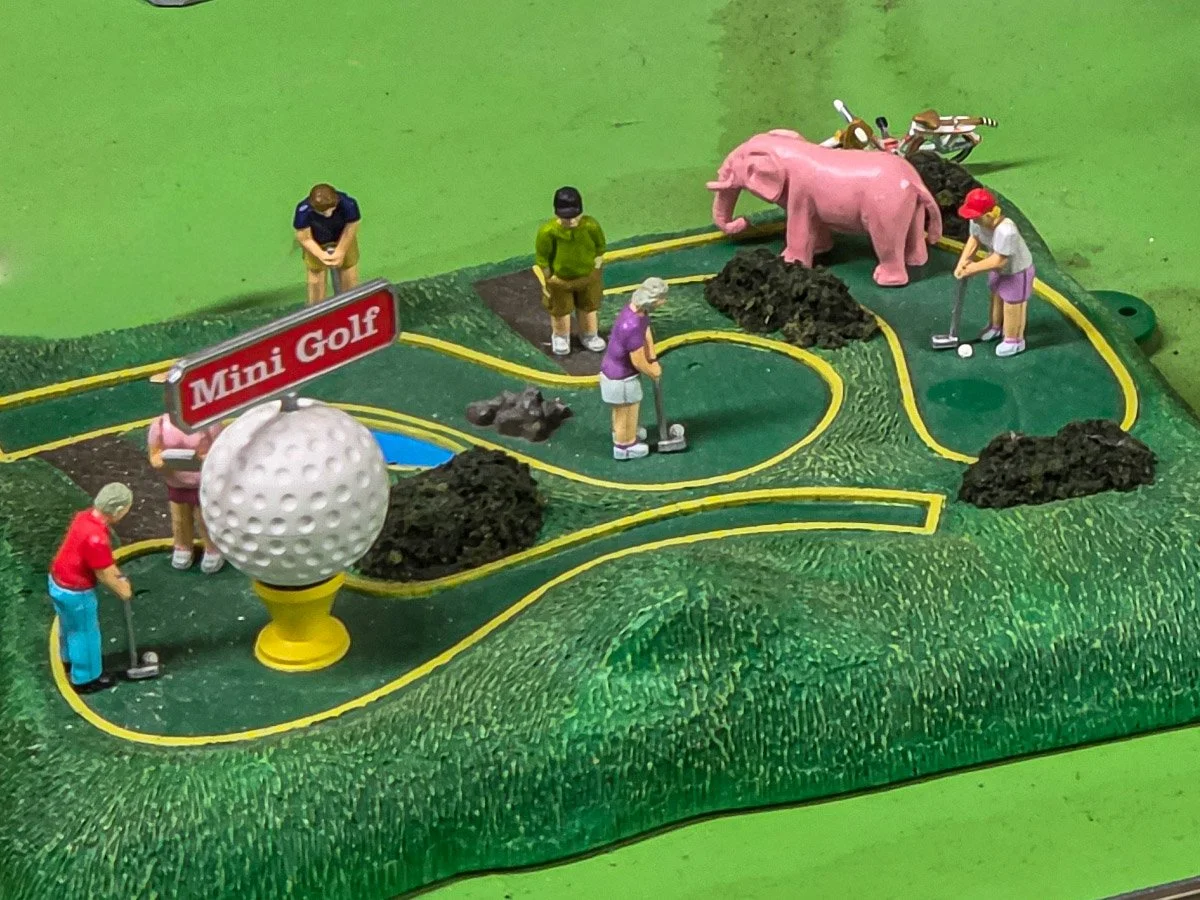
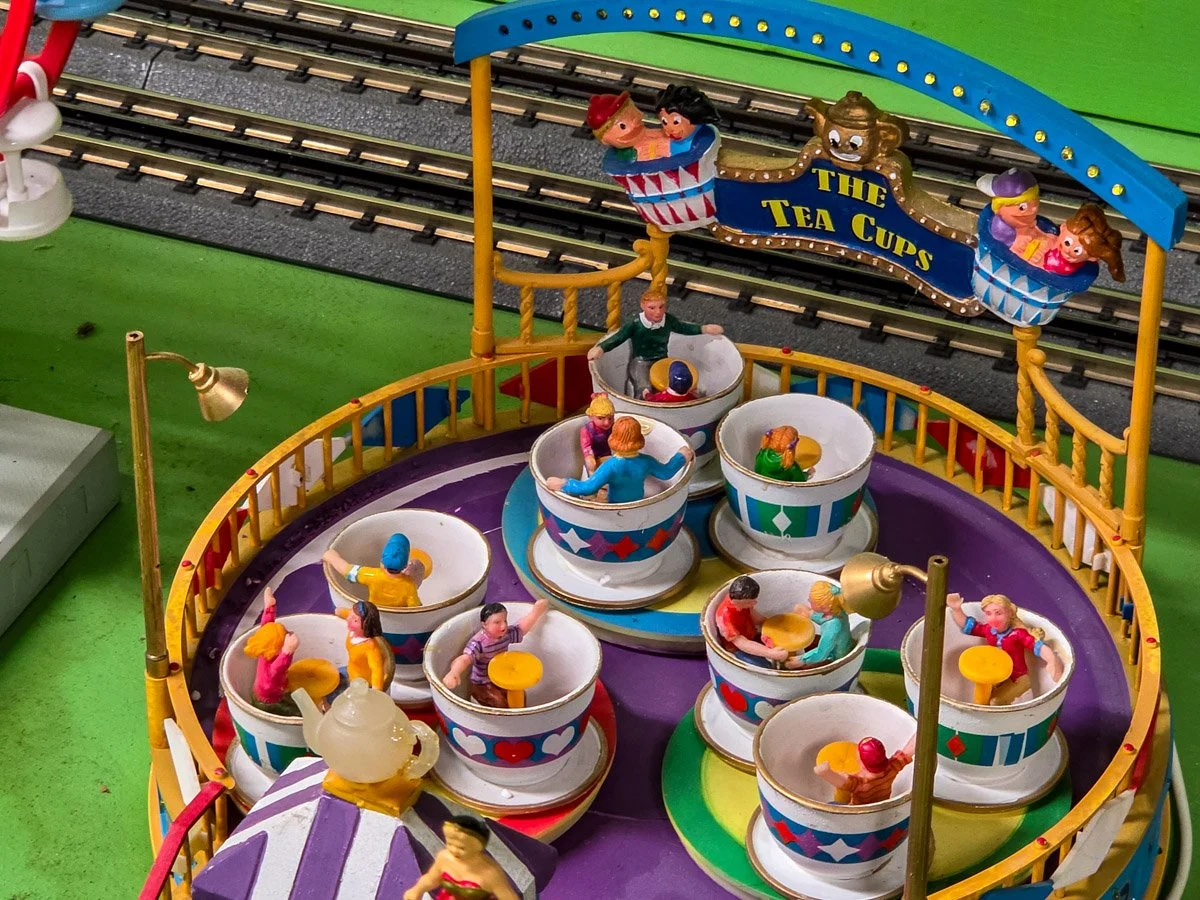
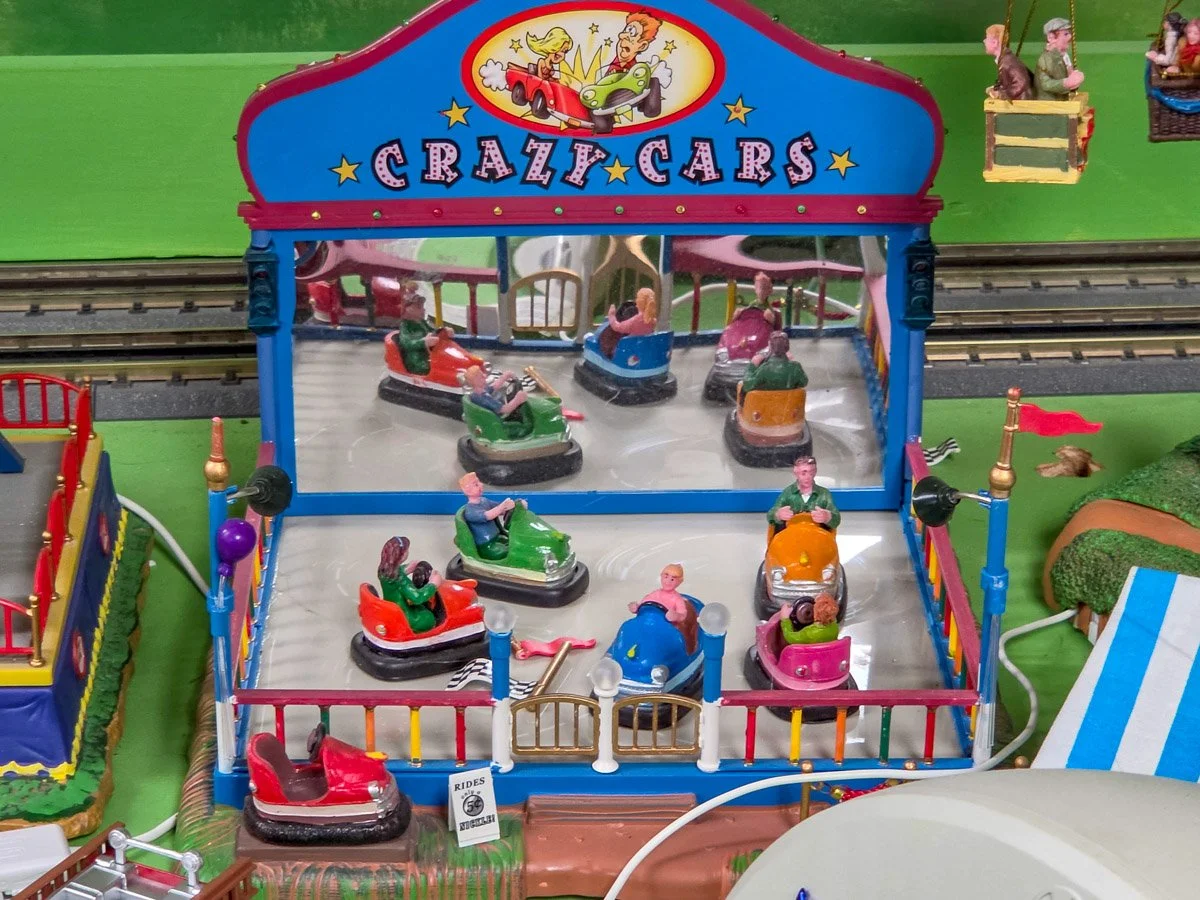
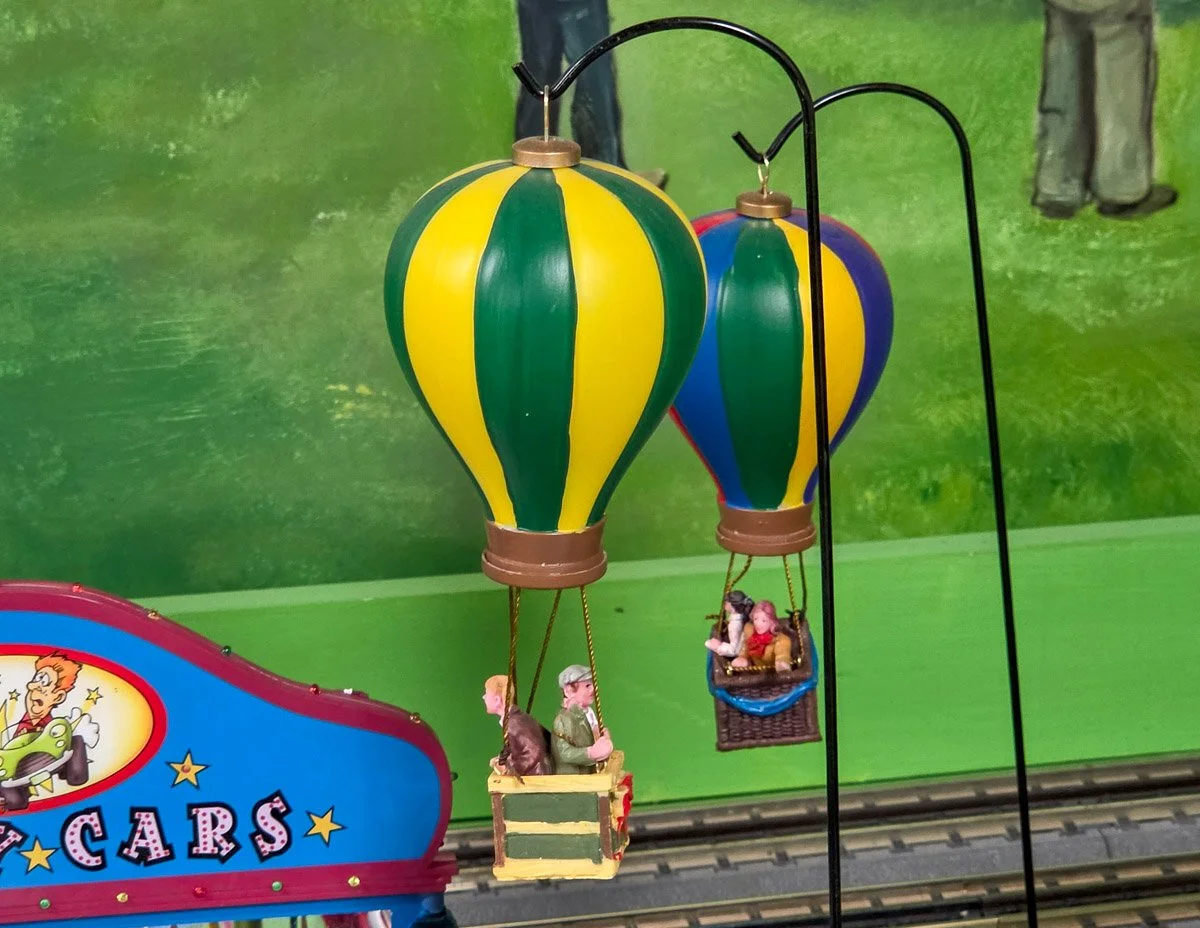
The carnival-like atmosphere feels even more authentic with animated rides and background music. There’s a Ferris wheel, pony rides, balloon rides, a merry-go-round, an amphitheater featuring a patriotic brass band, and much more.
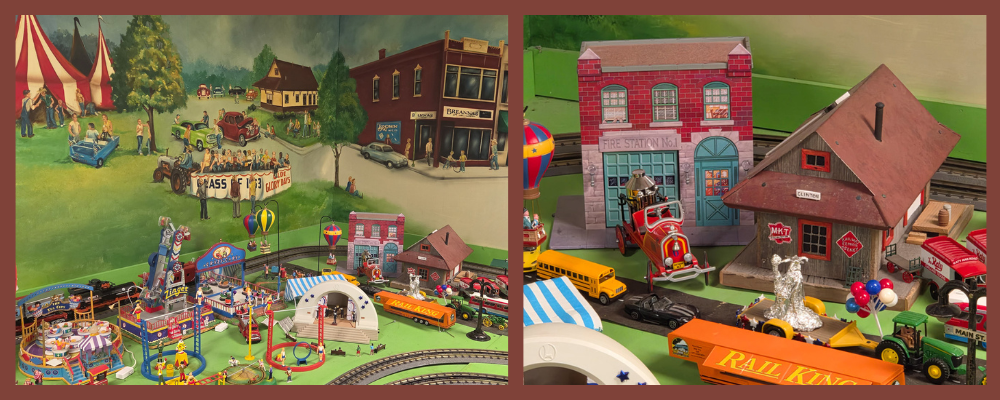
Following the festive Old Glory Days area is the Clinton Fire Station. Linda Sickman, an accomplished local artist, crafted a Hallmark Christmas ornament of the station. David found a larger display version of it in Sedalia. “The woman didn’t want to sell it at first, but I talked her into it,” he says.
Next is a model of the Clinton train depot. It’s another treasured item made by a man in Montrose. “He built it for me without telling me,” David says. “I walked into his place one day, and there it was.” As you may expect, it’s rich in detail, like an MKT sign posted on the side and a cart ready for luggage.
A model of a Dari-King ice cream and fast-food establishment represents the only Dary-King David ever knew growing up.
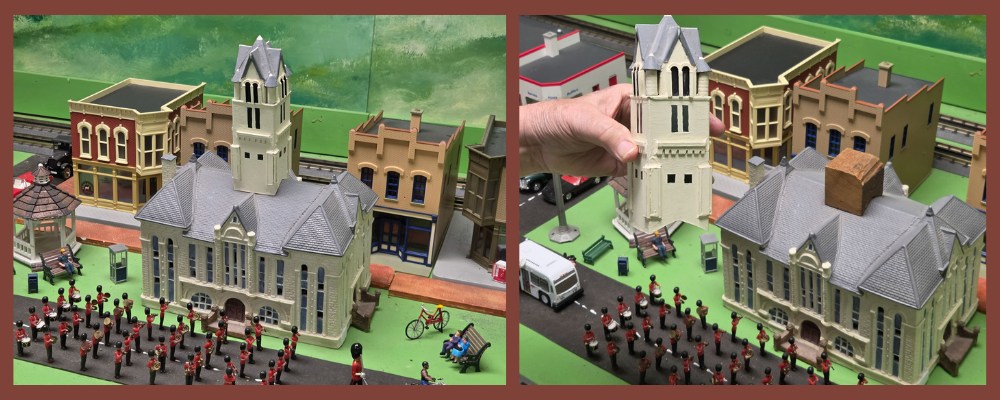
At the center of the layout's downtown area is the Henry County Courthouse. The courthouse model originally lacked its impressive tower, but his friend Charlie Townsend made one for him. “Very few people have one with the tower added back on,” David says. There’s also a parade with a marching band passing by in front of the courthouse.
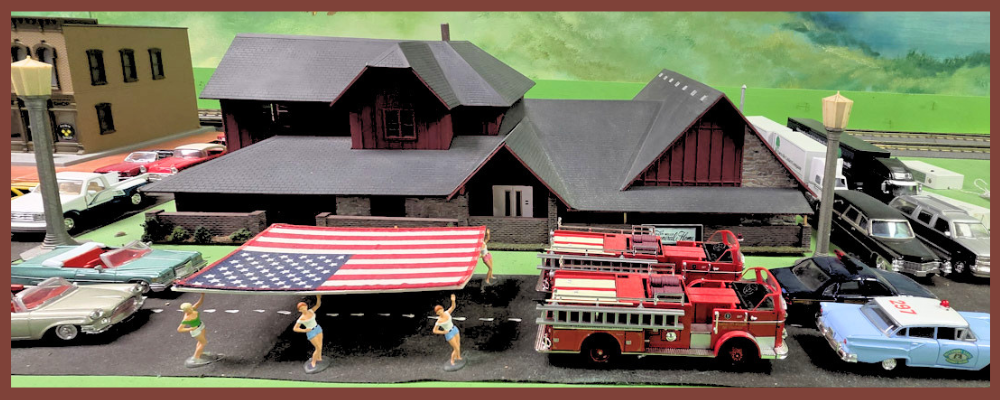
A friend in southern Missouri built a perfect replica of the Vansant-Mills funeral home. He did an excellent job capturing the structure with its intricate roof design. No detail was overlooked.
No depiction of Clinton is complete without mentioning a church. This section features the McLane Chapel, with a backdrop painted by Richard Brooks. Even the Englewood Cemetery is modeled with little headstones.
There is also a Peabody Coal Company car. “Peabody had coal mines west of town—miles and miles of them,” he explained. “Almost everything west of Clinton was coal country.” David has a coal dump that rotates cars to unload them without unhooking. “That’s how they do it today,” he says. “It’s fast and efficient. I haven’t gotten mine operating yet.” No doubt he’ll get it operational someday, though.
The last section is the power plant area, which still isn’t finished. It’s been “the toughest” part to build, according to David.
When asked if he had more room, he didn’t hesitate, “I’d probably expand the layout to include the south end of town, where the Katy came through and had a watchtower.” But he knows he won’t get the other half of the basement. His wife is apparently the better negotiator.
A Collector with an Eye for the Extraordinary
David’s collection is extensive, too extensive, according to his wife. “Hundreds of engines and cars,” he says. He’s more selective now, but he still makes purchases. “I bought an MKT engine just the other day.” His focus is mainly on MKT, with some Rock Island.
He owns a Lionel “girl’s train” from the 1950s—the pink one that was famously a market failure. He has a complete set with boxes. “The boxes alone can bring hundreds of dollars,” he says.
The Joy and Humor of the Hobby
David loves running trains more than anything. Sometimes a little too much. “I got a little rambunctious and ran them too fast,” he admits. “They’d fly off the rails.” One engine is permanently ruined from such an incident. It now sits as a stationary piece as a reminder that having fun has its limits.
He wired his entire layout himself—two transformers, all the track—everything. “Sometimes it’s trial and error,” he says. He even has a voltmeter car he runs around the track to check for low‑voltage spots. One slow spot has plagued him for years. “I finally just accepted it,” he says. “Sometimes the track pieces just don’t fit together well.”
He once saved Christmas. A family called in a panic because a boy’s new train wouldn’t run. David discovered a single defective piece of track. He replaced it, and the train sprang to life. Joy to the world!
He also built a trackless parade train—a lawn mower engine pulling a coal car and three passenger cars. It can carry 12–14 people. He uses it for parades and Old Glory Days.
The Friend Who Shared the Rails
After moving to Clinton, David met photographer Don Kaiser. The two became close friends, united by their shared love of trains. Don had a studio on 3rd Street, and the building next to it was used as their train layout space. Don worked in HO scale; David in O scale. They operated trains there for years, until Don’s wife Betty’s health declined.
Don himself passed away a couple of years ago. “I miss him terribly,” David says. “We chased trains together, went to shows, rode the Union Pacific Big Boy twice.” Don’s son, Kenny, filmed hours of railroad footage and even made a DVD that was offered at the museum.
Life Beyond the Rails
David’s life has never been defined by just one role. He was a funeral director, a former coroner, a community leader, and—unexpectedly—a pastor. He sold the funeral home to his son, Curtis, and planned to retire, but the First Christian Church in Windsor needed someone. “I wasn’t ordained—just someone who loved the Lord,” he says. After resisting for a month, he agreed to serve for one year. That was 14 years ago, in 2012. He’s still there.
He has five children: Mary (who sadly passed away twelve years ago), Curtis, Christopher, Carrie, and Crystal. All of them live nearby except Crystal, who resides in Papillion, Nebraska. None of them shares his passion for trains. “When I die, my kids will sell it,” he says matter-of-factly.
The Future of the Hobby
David is honest about the challenges facing model railroading. “It’s gotten too expensive for the average person,” he says. Engines can cost $1,000–$1,500. Starter layouts cost hundreds of dollars. Marx is out of business. Lionel and MTH are still around, but everything is made in China.
His advice for young collectors is simple: start small. “Thomas the Tank wooden sets are a good start for kids,” he says. But getting into real model railroading takes money.
A Legacy on the Rails
David and his wife traveled the Katy line from Clinton to San Antonio, visiting old stations—most of which are in bad shape, with a few turned into museums. They found memorabilia in antique stores along the way. “Around here, Katy items are almost impossible to find anymore,” he says. “It’s all been picked over.”
When asked if there were times when he had wanted pieces but let them slip away, he says, “I’m sure I have.” When he first started collecting, he bought anything he could. Once he focused on MKT, he bought only Katy items, but those became harder and harder to find.
When someone once told him they only dreamed of trains but never started, David smiled and said, “It’s a good thing they didn’t. Once the bug bites, it’s hard to give it up. It gets in your blood.”
And that is the truth of David Mills: a man whose life has been shaped by rails both real and imagined, by friendships forged in shared passions, by a community he has served in countless ways, and by a joy that has never dimmed.
“I’ve had a lot of bad days in my life,” he says, “but never a bad day playing trains.”
This article was written by Mark Rimel based on interviews with David Mills. Mark is a volunteer at the Henry County Museum. All rights reserved 2026.